Introduction to The Benefits of AI in Enterprise Software: Beyond Automation
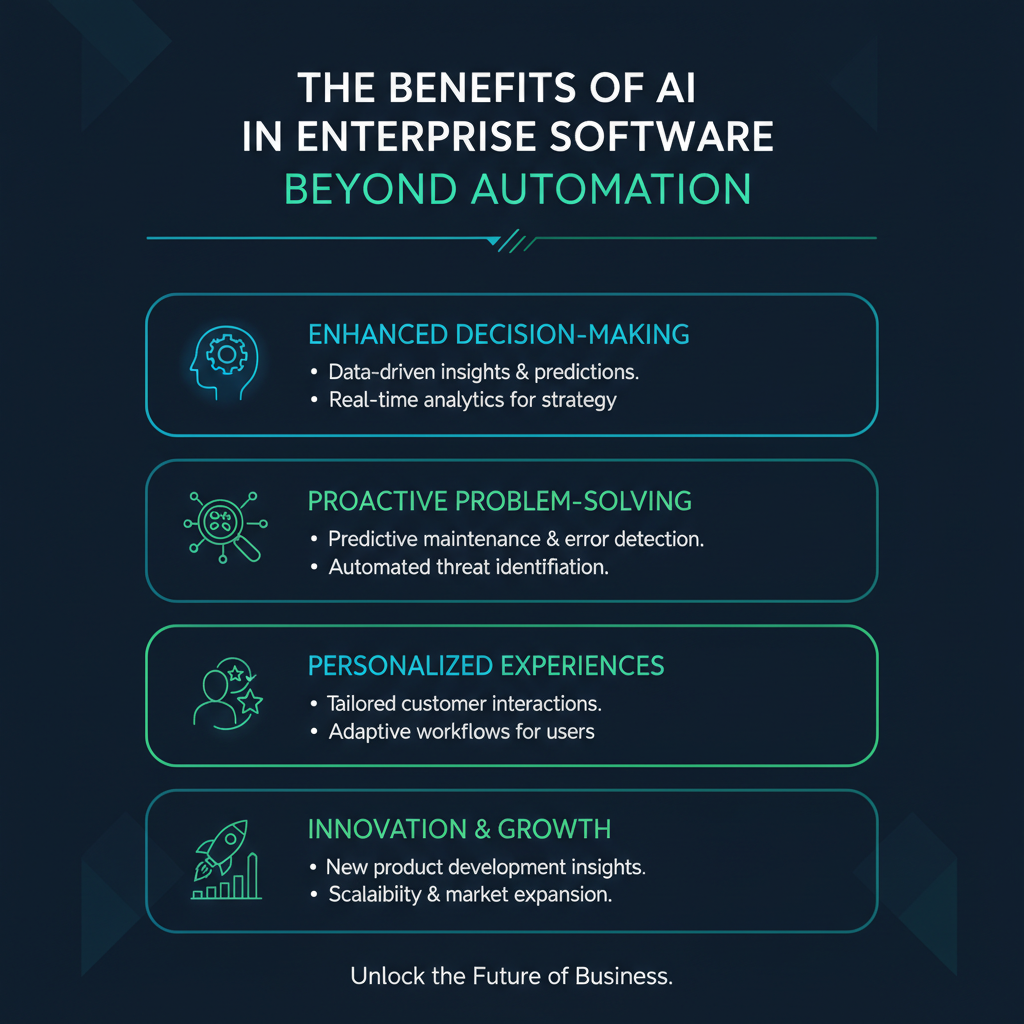
The narrative surrounding artificial intelligence in the corporate sector often stalls at the concept of simple automation. While robotic process automation handles repetitive tasks, the true benefits of ai in enterprise software emerge when systems transition from executing static rules to generating actionable intelligence. For organizations in the United States, this shift represents a move from reactive maintenance to predictive strategy.
Key Takeaways
- For organizations in the United States, this shift represents a move from reactive maintenance to predictive strategy.
- At Technologies, we observe that modern enterprises no longer view AI as a bolt-on feature.
- Instead, it serves as the foundational architecture for decision-making.
- The Strategic Shift: From Efficiency to Intelligence Moving beyond basic task execution allows companies to optimize complex workflows.
At Technologies, we observe that modern enterprises no longer view AI as a bolt-on feature. Instead, it serves as the foundational architecture for decision-making. By integrating machine learning models directly into the software stack, businesses can interpret vast datasets in real-time, identifying patterns that remain invisible to traditional analytical tools.
The Strategic Shift: From Efficiency to Intelligence
Moving beyond basic task execution allows companies to optimize complex workflows. When AI is embedded into custom enterprise solutions, it transforms how teams interact with their data. The following table illustrates the functional evolution of enterprise systems:
| Capability | Traditional Software | AI-Enhanced Enterprise Software |
|---|---|---|
| Data Processing | Manual Querying | Predictive Analytics |
| User Experience | Static Interfaces | Adaptive Personalization |
| System Health | Reactive Debugging | Proactive Anomaly Detection |
This introduction to advanced AI integration highlights why businesses are prioritizing custom development over off-the-shelf products. Generic software often fails to address the specific nuances of an organization’s operational data. By utilizing bespoke AI/ML product development, firms gain the ability to tailor algorithms to their unique market challenges.
Whether your goal is to refine supply chain logistics or enhance customer engagement, the objective remains consistent: creating software that learns. As you explore the potential of these technologies, consider how your current infrastructure supports this evolution. For those managing aging systems, understanding how to transition is vital, as noted in our guide on Legacy Software Modernization Your 2026 Enterprise Guide. True enterprise value is found not in replacing human effort, but in augmenting human capability through intelligent, data-driven software design.
Section 2
The benefits of AI in enterprise software extend far beyond simple task automation. For organizations aiming to maintain a competitive edge in the United States market, integrating machine learning into core business processes is now a prerequisite for operational excellence. When we explain benefits of ai in enterprise software clearly to our customers, we focus on how intelligent systems transform raw data into actionable intelligence, allowing leadership to make decisions based on predictive insights rather than historical reporting.
At Technologies, we observe that the most successful implementations move past basic rule-based logic. Instead, they utilize adaptive models that learn from user behavior and system performance. This shift allows for dynamic resource allocation and personalized user experiences that scale alongside your business growth. Whether you are looking at Enterprise Software Development or optimizing existing workflows, the objective is to reduce technical debt while increasing system agility.
Core Advantages of Intelligent Integration
Adopting AI-driven software architectures provides measurable improvements in efficiency and accuracy. The following table outlines how these advancements compare to traditional software methodologies:
| Feature | Traditional Software | AI-Enhanced Software |
|---|---|---|
| Decision Making | Static, rule-based | Predictive, data-driven |
| Maintenance | Reactive patching | Proactive, self-healing |
| User Experience | One-size-fits-all | Context-aware, personalized |
| Scalability | Manual infrastructure | Automated, elastic |
Beyond the technical metrics, the primary value lies in how these tools empower your workforce. By offloading repetitive analytical burdens to specialized AI/ML product development modules, your team can focus on high-value strategic initiatives. This transition is particularly vital when considering Legacy Software Modernization Your 2026 Enterprise Guide, where integrating modern intelligence can breathe new life into aging infrastructure.
Implementing these solutions requires a clear roadmap. We prioritize modular development, ensuring that each AI component serves a specific business function. This granular approach prevents system bloat and ensures that your technology stack remains flexible enough to adapt to future market shifts. By focusing on high-impact use cases, enterprises can realize a faster return on investment while building a foundation for long-term innovation.
Section 3
To explain benefits of ai in enterprise software clearly for customers, we must look past the hype of automation and focus on how intelligence transforms core business operations. The primary benefits of AI in enterprise software center on predictive capability and data-driven decision-making. When organizations integrate machine learning into their existing architecture, they move from reactive maintenance to proactive strategy.
Strategic Advantages of AI Integration
At Technologies, we observe that businesses often struggle with fragmented data silos. By applying AI/ML product development, firms can unify these disparate streams into actionable intelligence. This shift is not merely about speed; it is about accuracy and the ability to forecast market shifts before they manifest in financial reports.
Consider the following operational improvements enabled by intelligent software:
- Predictive Maintenance: Identifying hardware or software failures before they impact the end-user experience.
- Dynamic Resource Allocation: Adjusting server loads and human capital distribution based on real-time demand patterns.
- Enhanced Security Protocols: Detecting anomalous behavior in network traffic that standard rule-based systems often miss.
For companies currently evaluating their infrastructure, understanding these shifts is vital. Whether you are focused on Enterprise Software Development or seeking to optimize existing workflows, the integration of intelligent algorithms provides a distinct competitive edge.
Comparative Impact: Traditional vs. AI-Driven Systems
| Metric | Traditional Software | AI-Enhanced Enterprise Software |
|---|---|---|
| Data Processing | Static, rule-based | Adaptive, pattern-recognition |
| User Interaction | Manual input required | Predictive suggestions |
| System Maintenance | Scheduled updates | Self-healing and proactive |
As a consultancy firm specializing in custom solutions, we emphasize that the transition to intelligent systems requires a clear roadmap. It is not enough to simply add features; the software must align with specific business goals. By prioritizing scalable AI models, organizations ensure their technology stack remains resilient against future disruptions while maximizing the return on their digital investments.
Section 4
To explain benefits of ai in enterprise software clearly for customers, we must look past simple task automation. The true benefits of AI in enterprise software reside in the ability to transform raw data into predictive intelligence. When organizations integrate machine learning models into their core architecture, they shift from reactive operations to proactive strategy.
At Technologies, we observe that the most successful implementations focus on augmenting human decision-making rather than replacing it. By embedding AI/ML product development into custom workflows, businesses can identify operational bottlenecks before they impact the bottom line. This level of insight is essential for companies navigating complex digital transformations.
Practical Application in Custom Development
When we approach Enterprise Software Development, we prioritize scalability. AI is not a standalone feature; it is a layer that should permeate the entire stack. By utilizing custom-built models, your organization gains the ability to:
- Anticipate customer churn through behavioral analysis.
- Optimize supply chain logistics using real-time demand forecasting.
- Automate complex compliance reporting to reduce human error.
These applications demonstrate that the value of AI is found in its precision. By tailoring these technologies to your specific industry requirements, you ensure that your software investment drives long-term growth and operational resilience.
Section 5
To explain the topic clearly for customers, we must look past the hype of automation and focus on how intelligence transforms core business logic. When organizations integrate machine learning into their architecture, they move from reactive data processing to predictive decision-making. At Technologies, we observe that the primary benefits of AI in enterprise software stem from the ability to process unstructured data at a scale impossible for human teams.
Driving Value Through Intelligent Architecture
Custom software development is no longer just about building functional tools; it is about creating systems that learn from user behavior. By embedding AI/ML product development into your existing stack, you turn static databases into active assets. This shift allows for real-time anomaly detection, personalized user experiences, and optimized resource allocation.
Consider the following operational improvements enabled by intelligent enterprise systems:
- Predictive Maintenance: Anticipating system failures before they impact your infrastructure.
- Dynamic Resource Scaling: Adjusting server loads based on historical traffic patterns rather than fixed thresholds.
- Enhanced Data Integrity: Automating the cleaning and classification of incoming data streams.
Comparing Traditional vs. AI-Enhanced Systems
| Feature | Traditional Enterprise Software | AI-Enhanced Enterprise Software |
|---|---|---|
| Decision Logic | Hard-coded rules | Adaptive, data-driven models |
| Data Processing | Manual or batch-based | Real-time, autonomous analysis |
| User Experience | Static interfaces | Context-aware personalization |
For firms looking to modernize, the transition requires a strategic approach. Whether you are focusing on Enterprise Software Development or refining existing workflows, the goal remains the same: reducing technical debt while increasing output quality. By prioritizing AI integration, your business gains a sustainable competitive edge. This is not merely about adding features; it is about re-engineering your software to act as a force multiplier for your workforce, ensuring that every digital interaction provides measurable value to your bottom line.
Strategic Implementation of AI-Driven Enterprise Solutions
To explain the topic clearly for customers, we must look past the hype of automation and focus on how intelligence transforms core business logic. When organizations integrate machine learning into their existing infrastructure, they move from reactive data management to predictive operational excellence. At Technologies, our approach to AI/ML product development centers on embedding these capabilities directly into the workflow rather than treating them as external add-ons.
Operational Impact and Efficiency Gains
The primary benefits of AI in enterprise software manifest in the reduction of technical debt and the optimization of resource allocation. By deploying custom algorithms, firms can identify bottlenecks in real-time, allowing for dynamic adjustments that human oversight often misses. This is particularly vital when undergoing Legacy Software Modernization Your 2026 Enterprise Guide, where AI acts as the bridge between outdated data structures and modern, scalable architecture.
The following table illustrates how AI-enhanced systems outperform traditional manual processes in high-stakes enterprise environments:
| Operational Metric | Traditional Manual Process | AI-Integrated Solution |
|---|---|---|
| Data Processing | Batch-based, delayed | Real-time, predictive |
| Error Detection | Post-incident audit | Proactive anomaly flagging |
| Resource Scaling | Static, manual intervention | Automated, demand-based |
Customization as a Competitive Advantage
Off-the-shelf software often fails to address the unique constraints of complex industries. Through Custom Software Development, businesses can tailor AI models to their specific datasets, ensuring that the intelligence provided is relevant and actionable. Whether it is refining supply chain logistics or automating complex financial reporting, the goal remains the same: creating a system that learns from your specific organizational history.
By partnering with a firm specializing in Enterprise Software Development, companies ensure that their AI integration is secure, compliant, and built for long-term growth. The transition to intelligent software is not merely a technical upgrade; it is a fundamental shift in how your enterprise interacts with its own data to drive value for your end customers.
Section 7
The benefits of AI in enterprise software extend far beyond simple task automation. For organizations operating within the United States, the integration of intelligent systems represents a fundamental shift in how data informs decision-making and operational agility. When we explain benefits of ai in enterprise software clearly to our customers, we focus on the transition from reactive maintenance to predictive intelligence.
Strategic Implementation of AI/ML
At Technologies, we view AI not as a standalone feature but as a core component of modern architecture. By embedding machine learning models directly into custom workflows, businesses can identify patterns that remain invisible to traditional analytics. This approach is essential for companies looking to move beyond Enterprise Software Development and into the realm of autonomous business processes.
Consider the following operational improvements realized through intelligent software integration:
| Capability | Traditional Approach | AI-Enhanced Approach |
|---|---|---|
| Data Processing | Manual entry and batch reporting | Real-time predictive modeling |
| System Maintenance | Scheduled downtime | Proactive anomaly detection |
| User Experience | Static interfaces | Adaptive, personalized workflows |
Driving Value Through Customization
The true power of these technologies lies in their ability to adapt to specific industry requirements. Whether your firm requires sophisticated supply chain forecasting or automated customer support routing, custom AI/ML product development ensures that the software evolves alongside your business needs. This is particularly relevant for firms undergoing Legacy Software Modernization Your 2026 Enterprise Guide, where integrating AI can breathe new life into aging infrastructure.
To maximize these advantages, leadership teams must prioritize data quality and model transparency. When software provides clear, explainable insights, stakeholders gain the confidence to act on automated recommendations. By focusing on high-impact use cases, such as those detailed in our guide on Impactful Ai Use Cases For Software Development, enterprises can ensure that their technology investments yield measurable returns. Moving forward, the organizations that succeed will be those that treat AI as a foundational element of their digital strategy rather than an optional add-on.