02 / FINTECH
In financial software, correctnessis the feature.
Payments, lending and wealth platforms operate under constraints most software does not: money must reconcile, actions must be traceable, and failure states have regulatory consequences. We build financial systems with those properties designed in.
THE PROBLEM
Financial systems fail in the reconciliation
The hard part of financial software is not the transaction that succeeds. It is the one that times out, partially settles, or arrives twice. Systems that treat those as edge cases accumulate a reconciliation burden that grows with volume.
Layer on regulatory obligations, third-party rails with their own failure modes, and the expectation of an instant consumer experience, and the engineering standard required is materially higher than in most product work.
SYSTEMS WE BUILD
What we build for fintech.
01
Payment systems
Transaction processing with idempotency, retries and reconciliation designed as core behaviour rather than recovery tooling.
02
Banking software
Account, ledger and transaction models built for auditability, with balances derived rather than mutated.
03
Lending platforms
Origination, decisioning, servicing and collections workflows with the decision trail preserved end to end.
04
Wealth systems
Portfolio, position and reporting platforms handling market data and corporate actions correctly.
05
Financial dashboards
Operational and customer-facing reporting derived from the ledger, not assembled alongside it.
06
Compliance workflows
KYC, AML and monitoring processes integrated into onboarding and transaction paths rather than run separately.
INTELLIGENCE
Where AI genuinely changes the outcome.
And, just as importantly, where it does not. We are direct about which problems in this sector are better solved with conventional software.
Transaction monitoring
Anomaly detection on transaction streams, tuned for the false-positive rate a compliance team can genuinely process.
Document-heavy onboarding
Extraction and verification across identity and financial documents, reducing time to account opening.
Credit decisioning support
Models that inform a decision alongside the policy rules, with the contributing factors made explicit.
Operational assistants
Retrieval over policy, procedure and case history so operations staff find the applicable rule immediately.
CAPABILITIES
Recurring product requirements.
- Ledger and accounting models
- Payment integration
- Reconciliation
- KYC / AML workflows
- Real-time processing
- Reporting and disclosure
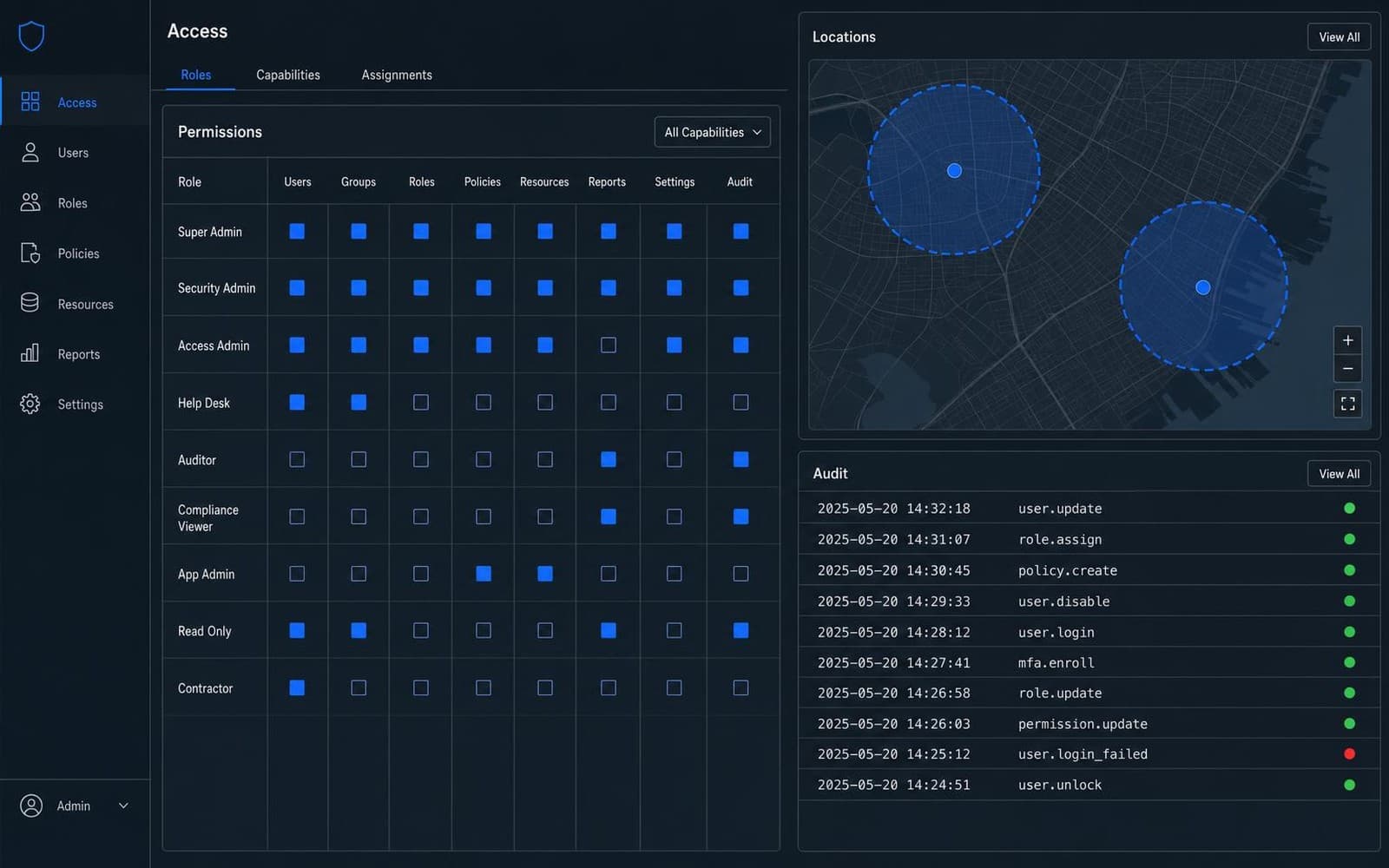
- Security and access control
- Third-party rail integration
RELEVANT WORK
Delivered in this sector.
PROCESS
From ambiguity to production.
01
Discover
Understand the business, the users, the constraints and the actual opportunity, including where software is not the answer.
02
Architect
Define the product, the AI approach, the data model and the system architecture, with the trade-offs written down rather than assumed.
03
Build
Engineer the software and the intelligence layers together, in short cycles, against criteria agreed before work started.
04
Validate
Test functionality, quality, security and, where models are involved, behaviour, against inputs that reflect real use.
05
Deploy
Launch through infrastructure and pipelines built for repeatable release, with a rollback path that has been exercised.
06
Evolve
Observe how the system behaves in production, improve it against that evidence, and scale what is working.
TECHNOLOGY
Typical stack for this work.
Product
- React
- Next.js
- TypeScript
- JavaScript
- Node.js
- Express
- ASP.NET
- Laravel
- Ruby on Rails
- Vue.js
- Nuxt
- Tailwind CSS
Data
- PostgreSQL
- MySQL
- MongoDB
- Redis
- Firebase
- Power BI
- Plotly
- Seaborn
- Dash
- Scala
Cloud & DevOps
- AWS
- Azure
- Google Cloud
- Docker
- Kubernetes
- Terraform
- Jenkins
- Git
- Bitbucket
Intelligence
- OpenAI
- LangChain
- Python
- PyTorch
- TensorFlow
- TensorRT
- OpenCV
- Deepgram
- ElevenLabs
- Perplexity
SPECIALIZED INSIGHTS & PRACTICES
Domain engineering guides & specialized practices.
FAQ
Common questions.
Least-privilege access, secrets managed outside the codebase, encryption in transit and at rest, dependency scanning in the pipeline, and audit logging on every state change that involves money or identity. Security review is part of delivery rather than a gate at the end.
We build to the requirements your compliance function defines. We are engineers rather than regulatory advisers. The value we add is implementing controls correctly and making them demonstrable, working from your legal and compliance guidance.
By designing for it from the first transaction: idempotency keys, immutable event records, derived balances, and automated reconciliation runs that flag discrepancies immediately rather than at month end.
NEXT STEP
Building something in fintech?
Tell us the constraints, whether regulatory, operational or technical. Those are usually what decides the architecture.