PLATFORMS · INTEGRATION · MODERNISATION
Modern software forcomplex organisations.
Enterprise systems fail for organisational reasons more often than technical ones. We build custom platforms that fit how a business actually operates, integrate with what already exists, and can be changed later without a rewrite.
CAPABILITIES
What we actually build.
Custom platforms, integrations and legacy modernisation for organisations with real complexity.
01
Custom enterprise platforms
Systems built around your operating model rather than a vendor's, designed to hold up as headcount, data volume and regulatory scope grow.
02
System integration
Connecting the platforms a business already runs on, from finance and operations to CRM and third-party services, so data stops being re-keyed between them.
03
Legacy modernisation
Incremental replacement of systems that still work but can no longer change, without an all-or-nothing cutover.
04
Enterprise web platforms
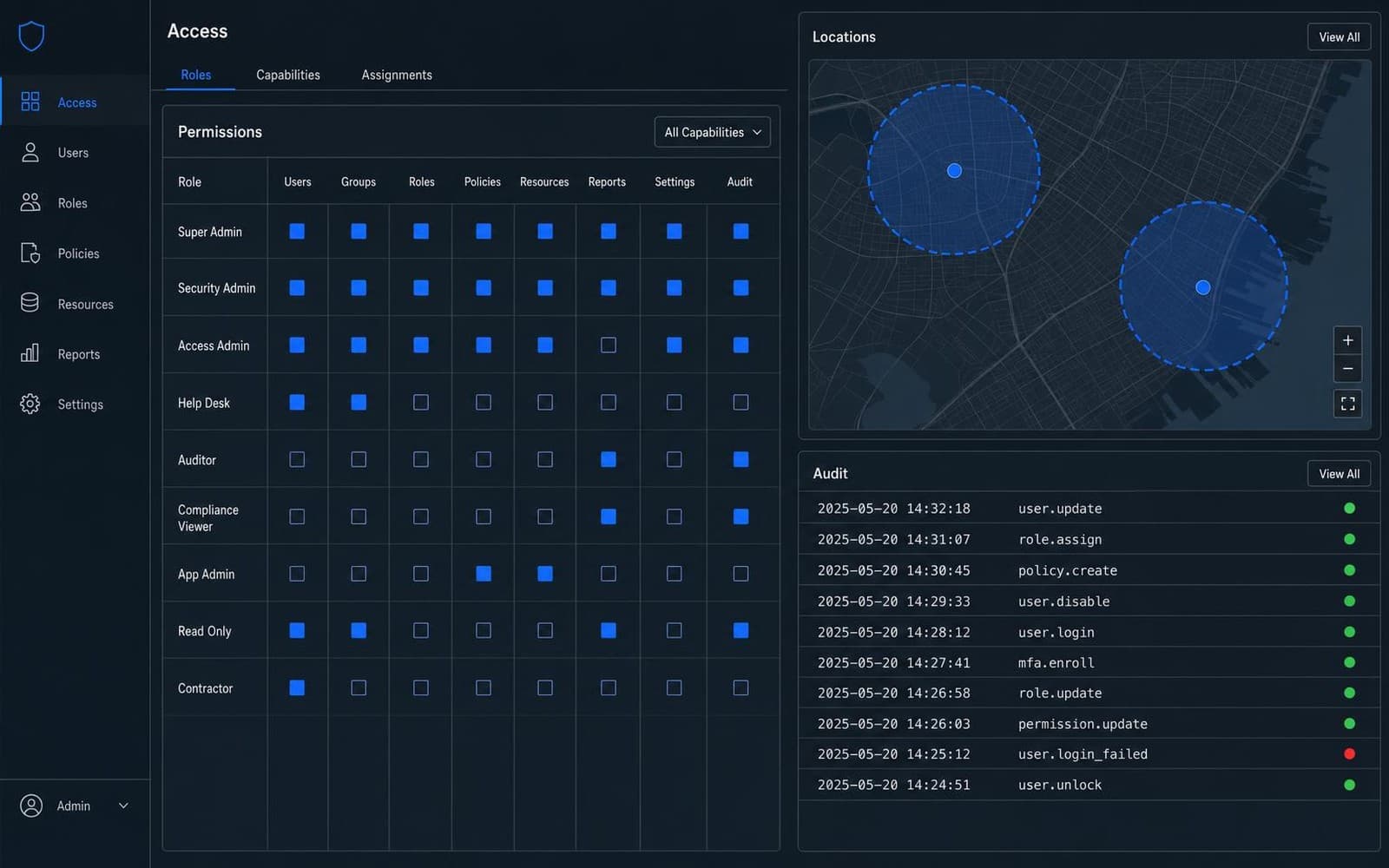
Internal tools, partner portals and customer-facing applications engineered for permissions, auditability and scale.
05
Data management
Modelling, migration and governance so the system of record is genuinely a single record.
06
Scalable architecture
Architecture decisions made explicitly and documented, with the trade-offs written down rather than discovered later.
07
Cloud integration
Deployment topology, environments and infrastructure designed alongside the application rather than after it.
08
Connected devices and IoT
Where operations depend on physical hardware, integrating device telemetry into the same systems the rest of the business uses.
OUTCOMES
What changes when this is done well.
One system of record
Fewer spreadsheets acting as production infrastructure, and fewer reconciliations between systems that disagree.
Change without a rewrite
Boundaries drawn so a new requirement touches one part of the system rather than all of it.
Integration that holds
Interfaces designed for failure, with retries, idempotency and reconciliation, not just for the happy path.
A modernisation path
A sequenced route off legacy that delivers value at each step instead of at the very end.
TECHNOLOGY
The stack we work in.
Product
Application and service engineering across web platforms.
- React
- Next.js
- TypeScript
- JavaScript
- Node.js
- Express
- ASP.NET
- Laravel
- Ruby on Rails
- Vue.js
- Nuxt
- Tailwind CSS
Data
Pipelines, storage and reporting infrastructure underneath analytics and AI.
- PostgreSQL
- MySQL
- MongoDB
- Redis
- Firebase
- Power BI
- Plotly
- Seaborn
- Dash
- Scala
Cloud & DevOps
Infrastructure, automation and the path from commit to production.
- AWS
- Azure
- Google Cloud
- Docker
- Kubernetes
- Terraform
- Jenkins
- Git
- Bitbucket
SELECTED WORK
Where this has shipped.

RELEVANT INDUSTRIES
Where domain knowledge changes the answer.
Insurance
Policy, claims and risk systems where regulation and accuracy are the product.
FinTech
Payments, lending and financial platforms where correctness is not negotiable.
Healthcare
Patient systems, clinical workflow and secure data infrastructure.
eCommerce
Custom commerce platforms, order management and marketplace systems.
TECHNICAL INSIGHTS & PRACTICES
Related engineering guides & regional practices.
FAQ
Common questions.
Software with more than one stakeholder group, real permission boundaries, integration into other systems, and a lifespan measured in years rather than months. The defining property is not company size. It is that the cost of getting the architecture wrong is paid repeatedly.
Agile and Scrum for most product work, where requirements are expected to move. Sequential delivery where scope is genuinely fixed by regulation or an external deadline. We pick per engagement rather than applying one methodology to every project.
Yes. A large share of enterprise work is integration with systems that are staying. We also work alongside in-house engineering teams rather than around them, including through the dedicated team model.
Incrementally wherever possible. We identify seams in the existing system, route functionality across to the new one behind those seams, and keep both running until the old path is genuinely unused. Big-bang cutovers are used only when there is no alternative.
NEXT STEP
Tell us what you're building.
Bring us the problem with its real constraints attached. We will tell you what we would build, and what we would not.